Archive
Why do some robots stay in use, and others stop?
Cases of physical AI in everyday places, and the reading behind them. Facts from public sources only; every entry lists its sources.
2018–presentCase
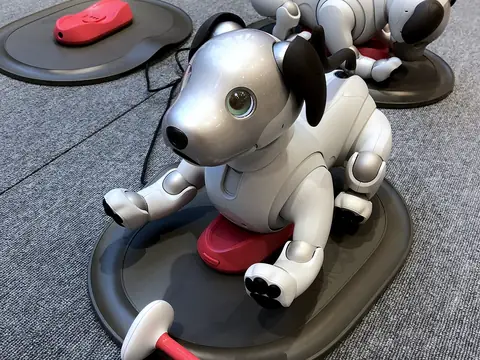
aibo (ERS-1000): the robot dog that returned after 12 years, now leaving Japanese shelvesLaunched in January 2018 at ¥198,000 with a required basic plan. It has 22 degrees of freedom and OLED eyes. In June 2026 Sony said Japanese sales will end once stock runs out.
Japanese sales ending; support continues
2021–presentCase
Amazon Astro: a home monitoring robot sold by invitation onlyUnveiled in September 2021 by invitation only. A periscope camera rises to 40 inches and on-device SLAM lets it move around the home. Astro for Business launched in November 2023 and ended in July 2024. In May 2026 it was still invite-only.
Still invite-only; business version ended
2019–presentCase
Hyodol: a grandchild-shaped doll robot that local governments give to older people living alonePilot distribution began in 2019 in Seoul’s Yeongdeungpo district and Goyang. It talks, reminds users to take medication, and alerts care workers when it detects no movement. In 2026 about 15,000 units were reported in use across more than 180 local governments.
In use and expanding
2013–presentCase
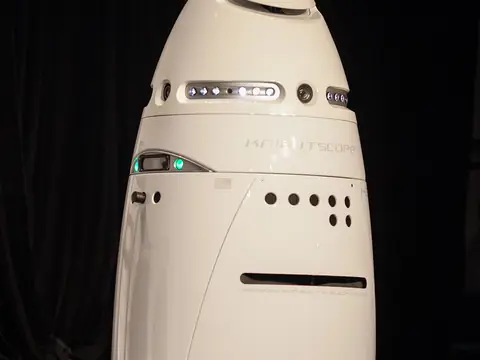
Knightscope K5: the patrol robot that hit a toddler and fell into a fountainA robot about 1.6 m tall patrols while recording its surroundings with 360° video and thermal cameras. In 2016 it collided with a 16-month-old at Stanford Shopping Center, and in 2017 it fell into a fountain in Washington. The company’s FY2025 annual report raised substantial doubt about its ability to continue as a going concern.
Company operating, losses continue
2017–2018Case
Kuri: a home robot built without a screen or a human voice, cancelled before launchPreorders opened in January 2017. In July 2018 production stopped and deposits were refunded after Bosch judged it was not a business fit. The company closed at the end of October that year and released its design documentation.
Production stopped; company closed
2017Case
LG airport guide robot: the first airport robot left the terminal after a six-month pilotAfter five months of testing, five guide robots and five cleaning robots entered Incheon Airport in July 2017. They gave flight and gate information in four languages and walked passengers to their destination. The pilot ended in December, and in 2018 Airstar robots built by Puloon Technology and LG CNS began operating.
Incheon pilot ended (December 2017)
2014–presentCase
Relay: a delivery robot that moved from hotel corridors to hospitalsPiloted as “Botlr” at the Aloft hotel in Cupertino in August 2014. Relay+, which rides elevators by itself, launched in 2021, and the company renamed itself Relay Robotics in 2022. A hospital model, RelayRx, followed in 2023.
Operating (mainly hospitals, inferred)
2002–presentCase
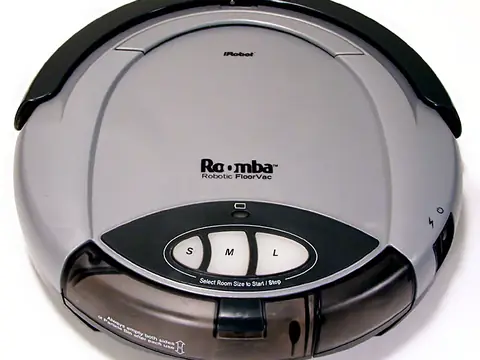
Roomba: the first robot to settle into homes, whose maker changed hands after bankruptcyLaunched in September 2002 at $199.95. Revenue peaked at $1.6 billion in 2021, then Amazon’s takeover was abandoned in January 2024. iRobot filed for Chapter 11 in December 2025 and emerged in January 2026 owned by Shenzhen Picea. Roombas are still on sale.
On sale; ownership changed
2015–presentCase
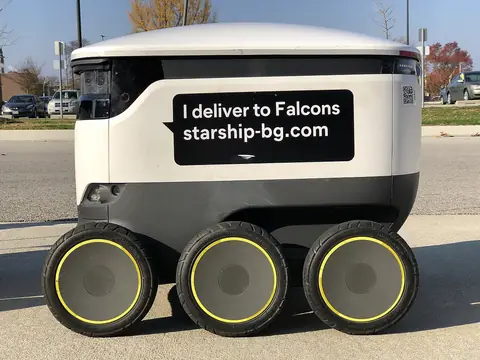
Starship: a pavement delivery robot that left college campuses for grocery deliveryIts first campus service began at George Mason University in January 2019. By October 2025 it had more than 2,700 robots, more than 9 million deliveries and more than 60 US campuses. In June 2026 it announced it would wind down US campus operations and focus on grocery and food delivery.
City delivery continues; US campuses withdrawn
2016–presentCase
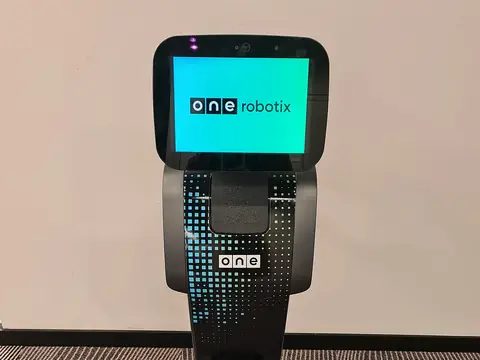
temi: a personal home robot that became a guide robot for hospitals and shopsSpun off in 2016 from Robo-Team, an Israeli maker of military robots. It launched for homes at $1,499 in 2018 and was deployed in Asian hospitals and public buildings during COVID-19 in 2020. It merged into Hong Kong’s RoboCore in 2024 and received investment from Foxconn in 2025.
Sold for business use (inferred)
2019–presentCase
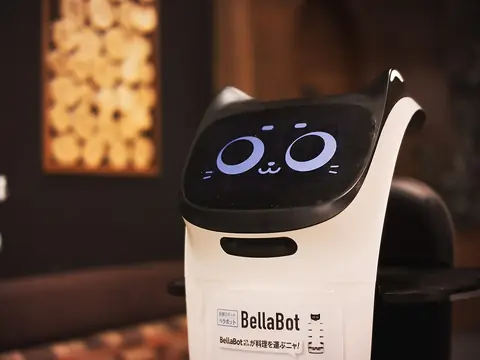
BellaBot: a cat-faced serving robot that helped staff rather than replaced themLaunched in December 2019. Japan’s Skylark group placed about 3,000 units in about 2,100 restaurants. Pudu said in April 2026 that it had shipped more than 120,000 robots in total, but it does not publish BellaBot’s own sales.
On sale
2016–presentCase
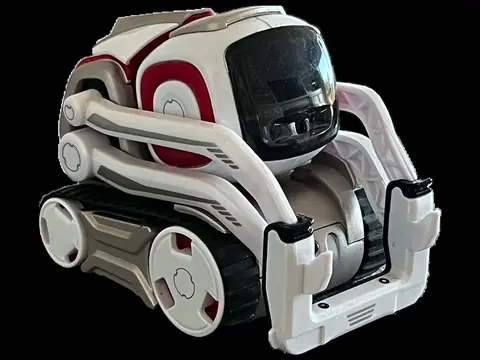
Cozmo and Vector: toy robots that sold well, from a company that fell firstCozmo (2016) and Vector (2018) were small robots given personality by former Pixar animators. Anki raised about $200 million and still closed in 2019. Digital Dream Labs bought its assets and relaunched the robots with a subscription, and was sued by Pennsylvania’s attorney general in 2024.
Anki closed; sold by the company that bought it
2018–presentCase
Moxi: a nurse’s helper with a million deliveries, unplugged at some hospitalsPiloted in Texas hospitals from 2018 and deployed commercially from 2020. Its maker reported a million deliveries in 2025 and was acquired by Serve Robotics in 2026. Moxi 2.0 arrived the same year, while a health system in Washington State ended its use.
In service; stopped at some hospitals
2017–presentCase
ElliQ: a talking robot that states bought for older people’s homesUnveiled in 2017 with design by Yves Béhar’s fuseproject and on sale in the US from 2022. New York’s Office for the Aging bought 900 units, and ElliQ 3 added a large language model in 2024. Most figures showing reduced loneliness come from the company and the agencies that bought it.
On sale
2019–presentCase
LOVOT: a home robot designed not to do any workAnnounced in December 2018 and on sale in Japan from December 2019. Shipments passed 10,000 in November 2022, and more than 18,000 were active in January 2026. A price rise is due in October 2026.
On sale
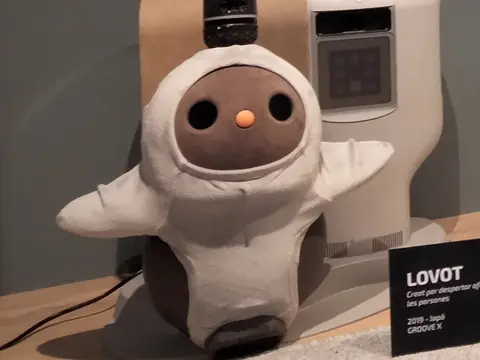
2020–2025Case
Moxie: a children’s robot kept alive by open source after its servers went offA social robot for children, unveiled in 2020 at $1,499. The company closed in December 2024 and its cloud went off in January 2025. With OpenMoxie, released alongside a final update, some robots now run from their owners’ computers.
Company closed; some kept running on community servers
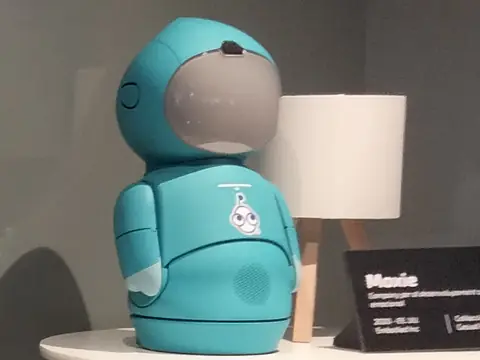
2014–2019Case
Jibo: a home robot that lost its functions when its maker closedFunded through crowdfunding in 2014 and launched in 2017. The company closed a year later, and most functions disappeared when the servers were switched off in 2019.
Company closed; servers shut down
2004–presentCase
PARO: a therapeutic seal robot still on sale after 20 yearsResearched at Japan’s AIST from 1993 and first leased to care facilities in 2004. Cleared as a medical device by the US FDA in 2009, with more than 7,000 units produced by 2022. Still on sale in 2026.
On sale
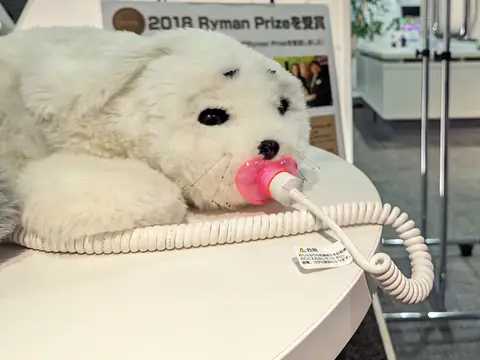
2014–presentCase
Pepper: a humanoid that left the shop floor and stayed in the classroomA wheeled humanoid that went on sale in Japan in 2015. Production stopped in 2020 and the European company went bankrupt in 2025. In Japan, Pepper+ with AI conversation is still on sale.
Discontinued in Europe; on sale in Japan
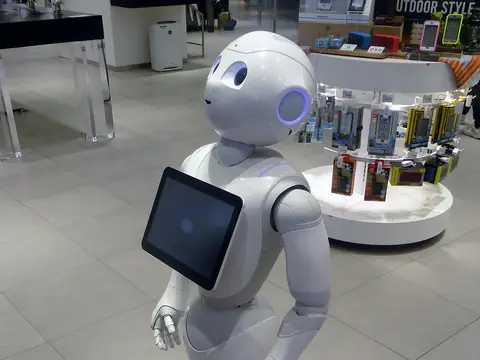
1999–2014Case
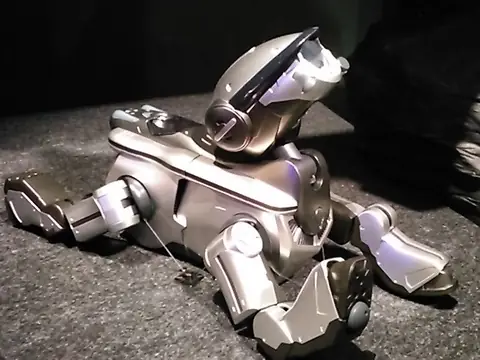
AIBO: still in use after Sony stopped repairsSony ended production in 2006 and repairs in 2014. An independent repair shop kept owners’ robots working with parts from retired units.
Maker left; kept in use by some owners